

How Group Health Insurance Can Help Improve Employee Retention and Workforce Stability
Offering health insurance is often seen as an effective way to attract and retain employees. But simply offering coverage does not guarantee that employees will see enough value in it to stay with an employer.
High employee premium contributions, rising out-of-pocket costs, limited choices, and difficult enrollment can affect how employees perceive their health insurance benefits. For employers, the question is not only whether to offer group health insurance for employees, but whether the plan provides meaningful value for the workforce.
A strong approach to group health insurance and employee retention considers affordability, coverage, employee needs, employer contributions, and the overall benefits experience. GoBenefits helps employers compare health insurance options, structure contributions, simplify enrollment, and manage benefits through one centralized solution.
Why Group Health Insurance Matters for Employee Retention
For business owners and employers, group health insurance can be an important part of an employee retention strategy. Health insurance for employees adds value to the overall compensation package and can help businesses remain competitive when attracting and retaining employees.
However, simply offering employee health insurance does not guarantee better retention. Employees may consider their monthly premium, out-of-pocket costs, coverage, provider access, plan choices, and the employer contribution when deciding how valuable their employee benefits are.
Affordable Employee Health Insurance
Employees are more likely to value health insurance benefits when their share of the premium is manageable. Employers should review employee contributions alongside overall plan costs to determine whether coverage remains affordable for their workforce.
Group Health Insurance Plans That Fit Employee Needs
Employees have different healthcare and financial needs. Offering appropriate group health insurance plans and coverage options can help employers provide benefits that are relevant to different employee circumstances.
Manageable Healthcare Costs
Employees may look beyond the monthly premium when evaluating their coverage. Deductibles, copayments, coinsurance, and out-of-pocket maximums can all affect the perceived value of an employer health insurance plan.
A Better Employee Benefits Experience
Employees also need to understand their coverage and easily manage their benefits. Clear information and a straightforward enrollment process can make employee health benefits easier to use and more valuable.
For employers, the goal is not simply to offer health insurance. It is to create a group health insurance strategy that balances employee needs, affordability, business costs, and long-term workforce retention.
How Retention Challenges Differ by Business Size
The right employee health benefits strategy can vary depending on business size, workforce needs, and budget. Small businesses, growing companies, and larger employers may face different challenges when balancing group health insurance costs, employee expectations, and workforce retention.
Small Businesses
Small businesses may have fewer resources to compete with larger employers on salary and benefits. A well-planned small business health insurance strategy can help provide meaningful coverage while keeping costs sustainable.
Employers can focus on:
- Comparing group health insurance plans that fit their workforce and budget
- Reviewing employer and employee contribution levels
- Offering coverage that adds value to the overall compensation package
Growing Businesses
As a company grows, its workforce and benefits needs can become more complex. Employers may need to regularly review their employee health insurance strategy to ensure it continues to support employees and remains manageable as the business expands.
Key considerations include:
- Changing employee needs and eligibility
- Affordable Group health insurance plan options and contribution structures
- Benefits administration as employee numbers increase
- Whether current coverage remains competitive for retaining employees
Larger Employers
Larger organizations may manage multiple employee classes, contribution structures, and workforce needs. A structured group health insurance strategy can help employers provide appropriate coverage while maintaining consistency across the organization.
Employers may need to focus on:
- Different employee classes and contribution requirements
- Workforce-specific coverage needs
- Consistent benefits administration and enrollment
- Regularly reviewing plan value and employee costs
Regardless of company size, employers should evaluate whether their health insurance benefits for employees remain affordable, relevant, and valuable enough to support broader employee retention goals.
6 Signs Your Health Insurance Strategy May Be Hurting Employee Retention
Sometimes the issue is not whether an employer offers health insurance, but whether the current strategy is delivering enough value.
Look for these warning signs:
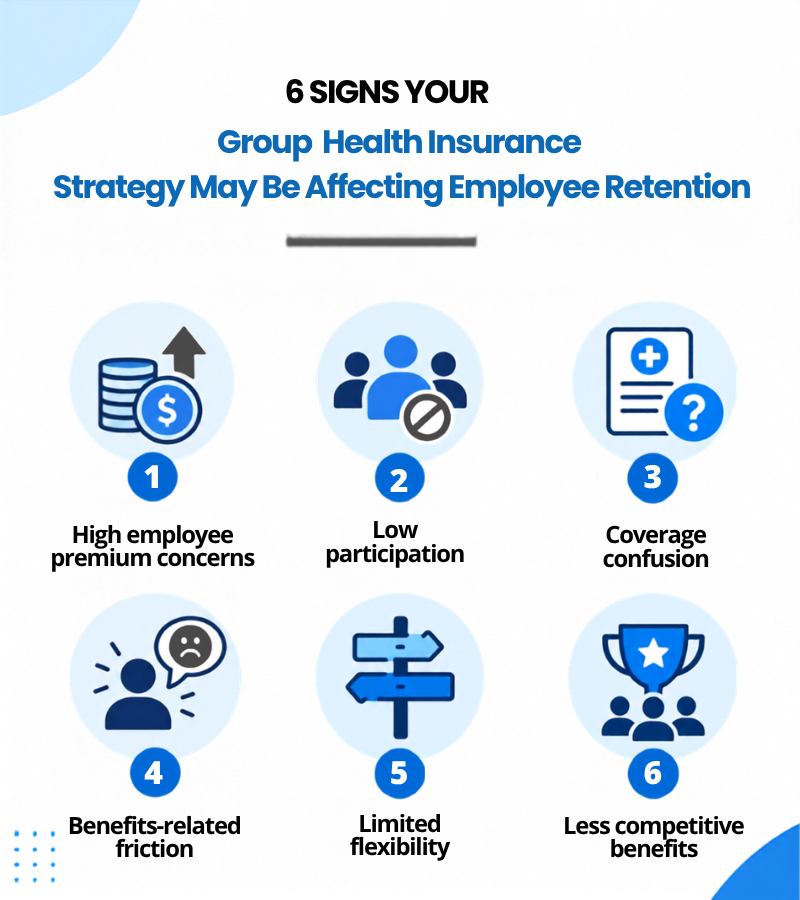
1. Employees Frequently Raise Concerns About Premium Costs
Repeated complaints about employee contributions may indicate that coverage is becoming difficult for employees to afford.
2. Employee Participation Is Lower Than Expected
Low enrollment can indicate that employees do not see enough value in the available coverage, cannot comfortably afford their contribution, or do not understand their options.
Participation should therefore be considered alongside employee feedback and the overall benefits experience.
3. Employees Have Difficulty Understanding Their Coverage
If employees frequently ask about basic plan features, costs, networks, or eligibility, the issue may extend beyond the insurance plan itself.
Employers may need to improve how benefits information is communicated and made available to employees.
4. Employees Experience Friction During Benefits Changes
Employees may need to make changes when they join the company, experience qualifying life events, add dependents, or make annual elections.
If these processes are unnecessarily difficult, the overall benefits experience can suffer.
5. Employees Do Not See Enough Flexibility in Their Benefits
A benefits package that does not accommodate different employee needs may become less attractive over time.
Employers should periodically review whether their available coverage and contribution structure continue to make sense for their workforce.
6. Your Benefits Package Is Becoming Less Competitive
Healthcare costs, workforce expectations, and the broader employment market can change over time.
A plan that once provided strong value may no longer be as competitive at renewal. Regularly reviewing the strategy can help employers identify where adjustments may be needed.
If several of these signs apply, the bigger question may not be whether your business offers health insurance. It may be whether your group health insurance strategy is delivering enough value to employees.
What Makes Employees See Value in Their Health Benefits?
A valuable employee health benefits strategy is not necessarily the most expensive one. Employees are more likely to value coverage when it addresses their needs at a cost they can reasonably manage.
Key factors include:
- Affordable employee contributions that fit within household budgets.
- Relevant coverage that provides useful healthcare benefits.
- Appropriate plan choices for different employee circumstances.
- Dependent and family coverage where applicable.
- Clear benefits information that employees can easily understand.
- A simple benefit experience from enrollment through ongoing changes.
For employers looking for a broader overview of employer-sponsored coverage, our Group Health Insurance Guide explains how group health plans work and what employers and employees should consider.
How Health Insurance Can Strengthen the Employee Value Proposition
Adds Value Beyond Salary
Employees evaluate the overall compensation package, not just their salary. A well-structured employer health insurance program can add meaningful value to total compensation.
Helps Employees Manage Healthcare Costs
Health insurance can help employees manage eligible healthcare expenses through employer-sponsored coverage. The value depends on the plan design, employee contribution, and out-of-pocket costs.
Supports Different Employee Needs
A workforce can include employees with different healthcare priorities, financial circumstances, and family needs. A thoughtful health insurance strategy for employee retention should account for these differences.
Strengthens the Overall Benefits Package
When coverage is affordable, relevant, and easy to understand, it can strengthen the overall employee value proposition. However, health insurance should complement not replace other factors that influence employee retention, such as compensation, workplace culture, career development, and flexibility.
How Employer Contributions Affect the Value Employees See in Health Insurance
The employer contribution can have a direct impact on how employees perceive the affordability of their coverage.
Even a comprehensive group health insurance plan may feel expensive if employees are responsible for a significant share of the premium. Employers can review:
- Employee premium contributions
- Employer health insurance contributions
- Employee-only versus dependent coverage
- Different employee classes
- Available plan options
- Overall benefits budget
- Changes in premiums at renewal
Some employers may use a fixed-dollar contribution, while others may structure contributions as a percentage or by eligible employee class. The appropriate approach depends on the employer’s workforce, budget, and applicable requirements.
The goal is to balance employee health insurance costs with a sustainable employer contribution that provides meaningful value.
How Employers Can Strengthen Their Group Health Insurance Strategy
Employers do not necessarily need to spend more to improve their benefits strategy. They should first understand where employees see value and where gaps may exist.
Review Employee Feedback and Participation
Enrollment levels and employee feedback can help identify concerns about affordability, coverage, plan choices, or communication.
Evaluate Employee Costs
Review what employees actually pay, including premiums and potential out-of-pocket expenses. This provides a more complete view of whether coverage remains affordable.
Assess Coverage Fit
As a workforce changes, its benefits can change too. Employers should periodically evaluate whether their group health insurance plans continue to meet employee needs.
For a detailed plan-selection framework, see 5 Things to Consider Before Choosing a Group Health Insurance Plan.
Review the Contribution Strategy
Changes in premiums can affect employee affordability. Reviewing contribution levels before renewal can help employers determine whether adjustments are needed.
Make Benefits Easier to Understand
Clear information about plan costs, coverage, provider networks, and available options can help employees make better-informed decisions.
Reassess Before Renewal
Renewal is an opportunity to review participation, employee costs, coverage, contribution levels, workforce changes, and available alternatives instead of automatically continuing the same strategy.
How GoBenefits Helps Employers Improve the Benefits Experience
A successful benefits strategy involves more than choosing coverage. Employers also need practical support for comparing plans, enrolling employees, managing benefits, and meeting applicable requirements.
Compare Group Health Insurance Plans
GoBenefits’ Insurance Quoting service helps employers compare group health insurance quotes and evaluate coverage based on business size, location, workforce needs, premiums, deductibles, networks, and plan types.
Simplify Employee Benefits Enrollment
GoBenefits’ Online Enrollment service helps employees review and select benefits during new-hire enrollment, annual enrollment, and qualifying life events.
Manage Benefits Throughout the Year
The Benefits Administration service helps employers manage benefits, eligibility, employee information, and payroll-related deductions through a centralized process.
Support ACA Requirements
For applicable employers, the ACA Compliance service supports areas including affordability tracking, eligibility, and 1094-C and 1095-C reporting.
Build a Health Insurance Strategy Employees Value
Group health insurance can support employee retention when employees see meaningful value in the coverage they receive. Affordability, employer contributions, relevant coverage, plan choices, and a straightforward benefits experience can all influence that perception.
Employers should regularly review whether their employee health benefits continue to meet workforce needs while remaining aligned with their budget.
With support for quoting, enrollment, benefits administration, and ACA compliance, GoBenefits helps employers build and manage a more effective group health insurance strategy.
Ready to review your employee health insurance strategy? Get in touch with us today to build a benefits program designed around your business and your employees.
Frequently Asked Questions
1. Can group health insurance improve employee retention?
Yes, group health insurance can contribute to employee retention when employees view the coverage as valuable, affordable, and relevant to their needs. The plan’s cost, coverage, contribution structure, and enrollment experience can all influence its perceived value.
2. Why is health insurance important for employee retention?
Health insurance can add meaningful value to an employee’s overall compensation package and help employees manage healthcare expenses. When coverage meets employee needs and remains affordable, it can strengthen the overall value of working for an employer.
3. Does offering health insurance reduce employee turnover?
Offering health insurance alone does not guarantee lower employee turnover. Its impact depends on factors such as affordability, coverage quality, employee contribution levels, plan options, and how effectively the benefits are communicated and administered.
4. What makes a health insurance plan valuable to employees?
Employees may value affordable premiums, manageable deductibles and out-of-pocket costs, useful provider networks, dependent coverage, appropriate plan choices, and a straightforward enrollment experience.
5. How can employers make health insurance more affordable for employees?
Employers can review plan options, compare total costs, evaluate employer contribution levels, consider different contribution structures, and assess whether the available coverage matches employee needs and the company’s budget.
6. How much should employers contribute toward employee health insurance?
There is no single contribution amount that works for every employer. Businesses should consider their budget, workforce, employee affordability, plan costs, and applicable requirements when determining an employer contribution strategy.
7. How can HR teams simplify employee health insurance enrollment?
HR teams can use an online enrollment platform that allows employees to review plans, make elections, update information, and manage qualifying life-event changes digitally. This can reduce paperwork and manual data entry while creating a more convenient employee experience.
8. How often should employers review their group health insurance plan?
Employers should review their coverage before each renewal and whenever there are significant changes in workforce needs, plan costs, employee participation, or benefits objectives. Regular review can help businesses avoid automatically renewing a plan that no longer provides the right value.