

Best Group Health Insurance for Small Business Owners in California: Plans and Costs
Choosing the best group health insurance for small business owners in California depends on factors such as employee count, location, provider networks, deductibles, and the company’s benefits budget. A plan that suits a small team may not be the right choice for a growing business with employees across multiple California counties.
According to Covered California’s October 2026 announcement, 82,905 Californians were enrolled through Covered California for Small Business as of September 2026, across 9,969 enrolled small businesses. The program also announced an 8.6% statewide weighted-average rate change for the 2027 plan year.
Whether you’re reviewing existing coverage or arranging benefits for the first time, understanding health insurance plans for small businesses in California can help you make a more informed decision.
GoBenefits, a trusted group health insurance agency, provides an all-in-one platform for businesses to compare group health insurance plans, manage employee benefits, streamline online enrollment, simplify benefits administration, and access ACA compliance support all in one place.
What Small Business Owners Should Know About California’s Group Health Insurance Market
California group health insurance options vary by carrier, service area, provider network, and employer eligibility. California employers can explore traditional group health coverage through private insurance carriers, including plans available through Covered California for Small Business (CCSB).
The right option depends on the business’s eligibility, employee locations, coverage requirements, and available plans.
How Small Business Health Insurance Works in California
Group health insurance for small businesses in California allows eligible employers to provide health coverage to qualifying employees through an employer-sponsored plan. Employers generally contribute towards premiums, while employees may pay a portion through payroll deductions.
Businesses can compare coverage through participating insurance carriers and, where eligible, Covered California for Small Business (CCSB). Available plans, premiums, and provider networks depend on the employer’s circumstances and the relevant service area.
Who Qualifies for California Small Group Health Insurance?
Businesses considering group health insurance for small businesses in California should distinguish between eligibility for a particular marketplace and their obligations under federal employer health insurance rules.
Eligibility can include:
- To qualify, a business must have at least one W-2 employee who meets the criteria, excluding the owner or the owner’s spouse.
- Having a majority of eligible employees live or work in California.
- Meeting applicable employee participation and employer contribution requirements.
Employers should review the current Covered California for Small Business eligibility guidelines before deciding which route to pursue.
Eligibility for the small-group marketplace is separate from the federal Affordable Care Act’s employer mandate. Businesses should assess their obligations based on the applicable rules and their workforce circumstances.
What Does Group Medical Coverage Include?
Group medical coverage generally helps employees access covered healthcare services, including doctor visits, hospital care, preventive services, and prescription medications, subject to the policy terms.
When comparing employee health insurance for small businesses in California, employers should review:
- Monthly premiums and employer contributions.
- Deductibles, copayments, and coinsurance.
- Annual out-of-pocket maximums.
- Prescription drug benefits.
- Access to doctors, hospitals, and specialists.
These factors help businesses evaluate the overall value of a plan rather than choosing based on its premium alone.
For a more detailed overview of coverage considerations, read our guide to choosing the right group medical insurance for small business employees.
Types of Group Health Insurance Plans for California Employers
When comparing California small business health insurance plans, employers should consider both the provider network and the way healthcare costs are shared.
Available group health plans can differ in provider access, referral requirements, premiums, and how employees share healthcare costs.
HMO Plans – Health Maintenance Organization
- How it generally works – Uses a defined provider network and may require referrals for specialist care.
- What employers should consider – Network access, referral rules and service area.
PPO Plans – Preferred Provider Organization
- How it generally works – Offers a preferred network and may cover some out-of-network care at a higher cost
- What employers should consider – Provider choice, premiums and out-of-network expenses
EPO Plans – Exclusive Provider Organization
- How it generally works – Generally limits routine coverage to its designated network
- What employers should consider – Participating doctors, hospitals and specialist access
Actual benefits and restrictions depend on the policy. Employers should verify provider participation and coverage terms before selecting a plan.
Small Business Group Health Insurance Costs in California
The health insurance cost for small business owners in California depends on the selected plan, employee enrollment, location, coverage level, and employer contribution strategy. There is no single premium that applies to every business.
What Affects Group Health Insurance Premiums?
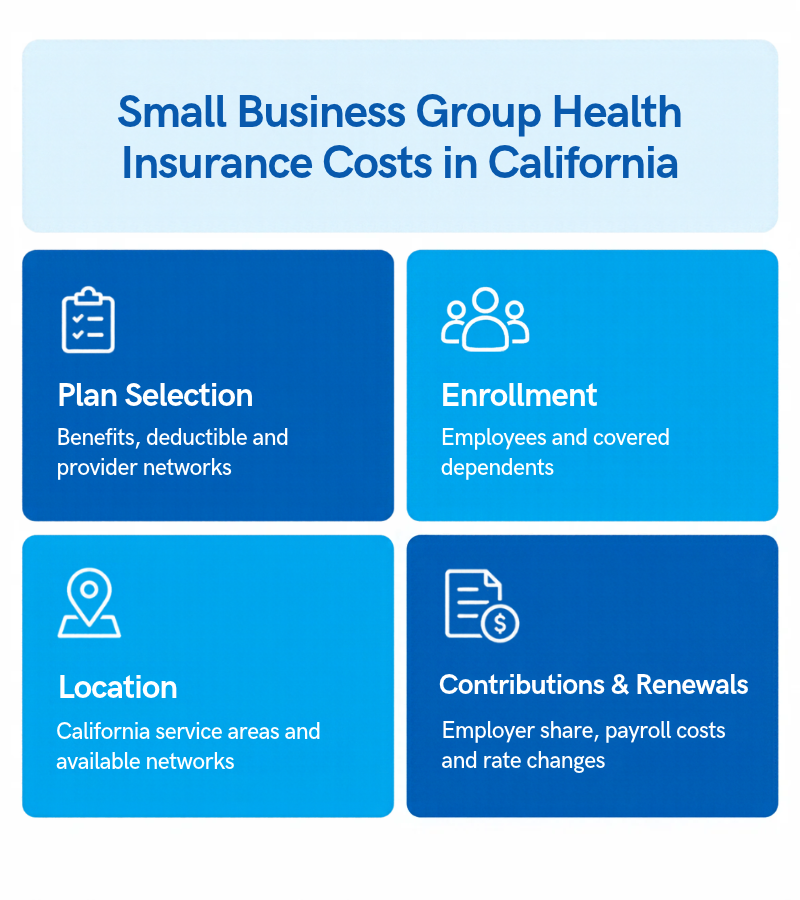
The main factors influencing small business health insurance costs in California include:
- Plan selection: Benefits, deductibles, and network structures affect premiums and employee expenses.
- Employee enrollment: The number of employees and dependents enrolled affects total premium expenditure.
- Geographic location: Available carriers, networks, and prices can vary across California service areas.
- Employer contributions: The business’s share of the premium determines its benefits expenditure.
- Renewal changes: Premiums and available plans may change at renewal.
For accurate group health insurance quotes for California small businesses, employers should compare current options based on their actual workforce.
Employer Contributions and Employee Costs
The total premium is not necessarily paid entirely by the employer. Businesses establish a contribution strategy, and employees may pay the remaining portion of their premiums.
Eligible employers using Covered California for Small Business must meet applicable contribution requirements, including a minimum employer contribution towards employee premiums. Employers should confirm the current rules for their arrangement.
When evaluating affordable group health insurance for California employers, compare the employer’s monthly expenditure alongside employee payroll deductions, deductibles, and other out-of-pocket costs.
How to Budget for 2027 Premium Changes
Covered California for Small Business announced an 8.6% statewide weighted-average rate change for the 2027 plan year on October 13, 2026. The announcement also confirmed the addition of Western Health Advantage to the marketplace.
This figure applies to the marketplace’s weighted-average rate change. It should not be treated as the expected increase for every employer or plan.
When reviewing employer health insurance costs in California, businesses should:
- Compare renewal quotes with their existing coverage.
- Review available alternatives with comparable benefits.
- Reassess employer and employee contribution levels.
- Check whether preferred doctors and hospitals remain in-network.
- Consider how hiring or workforce changes could affect future benefits spending.
A structured renewal review can help employers make decisions based on coverage, affordability, and employee needs rather than price alone.
Affordable Employee Benefits and Alternative Funding Options
Providing affordable employee benefits does not necessarily mean choosing the plan with the lowest monthly premium. Employers should consider the combined effect of premiums, deductibles, employee contributions, and access to care.
Traditional group coverage is one approach. Depending on the business and applicable requirements, employers may also evaluate other funding arrangements.
Beyond managing healthcare costs, group health benefits can also support employee satisfaction. Learn more about how group health insurance can improve employee retention and workforce stability.
How Should Employers Compare Funding Options?
These arrangements are not interchangeable. Employers should confirm availability, suitability, and compliance requirements before deciding which structure to pursue.
How to Compare Small Business Health Insurance Plans in California
To identify the best health insurance for small businesses in California, compare the total cost of coverage alongside provider access, employee contributions, and ongoing administration.
1. Assess Your Workforce
Identify the number of eligible employees, their work and residential locations, dependent coverage needs, and preferred healthcare providers. Businesses with employees across several counties should confirm that the proposed networks provide suitable access.
2. Compare Premiums and Out-of-Pocket Costs
Review premiums, deductibles, copayments, coinsurance, and out-of-pocket maximums. A lower premium may mean higher expenses when employees receive care, so assess the overall cost-sharing structure.
3. Review Available Coverage Options
Compare HMO, PPO, and EPO networks alongside available coverage levels. Check prescription benefits, referral requirements, and provider participation before making a decision.
When comparing group health insurance for small business California options, review network restrictions, prescription coverage, deductibles, and the total employer contribution.
4. Consider Alternative Funding Arrangements
Traditional fully insured group coverage is one option. Depending on eligibility and business needs, employers may also consider an Individual Coverage Health Reimbursement Arrangement (ICHRA) or level-funded health plan.
These arrangements have different funding, administration, and compliance requirements. Their availability and suitability should be confirmed with a qualified benefits professional.
5. Plan for Growth and Administration
Your benefits strategy should accommodate new hires, annual enrollment, employee changes, and payroll deductions. Reviewing these processes alongside premiums can help businesses maintain a manageable benefits program as they grow.
For more guidance, read 5 Things to Consider Before Choosing a Group Health Insurance Plan.
How GoBenefits Helps California Businesses Manage Health Benefits
GoBenefits is a group health insurance agency offering an all-in-one platform to help employers compare coverage and manage employee benefits. Businesses can access insurance quoting, online enrollment, benefits administration, and ACA compliance support through one connected benefits solution.
GoBenefits brings these processes together through its insurance quoting and employee benefits services.
Compare Group Health Insurance Quotes and Plan Options
GoBenefits helps employers review available California group health insurance options against their coverage requirements, workforce needs, and benefits budget.
GoBenefits group health insurance quoting service provides an online process for reviewing eligible plan options and obtaining quote support.
Employers should confirm the carriers, plans, and funding arrangements available for their particular business and employee locations.
Simplify Employee Enrollment
Once a plan has been selected, employees need a clear way to review their benefits and complete their elections.
GoBenefits online enrollment service supports benefits enrollment for new hires, open enrollment, and qualifying life events, helping businesses organize employee selections and records.
Manage Ongoing Benefits Administration
Employee benefits require ongoing attention to eligibility, employee information, benefit elections, and payroll-related deductions.
GoBenefits benefits administration service helps businesses organize these processes through a centralized system.
Support Applicable ACA Compliance Processes
Employers with applicable reporting responsibilities may also need to track ACA eligibility, affordability, and required information reporting.
GoBenefits provides ACA compliance services to support relevant compliance and reporting processes.
For California employers, the goal is to build a benefits strategy that fits the business, supports employees, and remains manageable as the workforce changes.
Compare Group Health Insurance for Your California Business
Comparing small business health insurance in California involves more than finding a competitive premium. Employers need to compare coverage, employee contributions, provider networks, and ongoing administration to select a suitable benefits strategy.
Before making a decision, compare current quotes, review plan networks, understand the applicable eligibility and contribution requirements, and assess how the benefits package will support your employees as the business grows.
GoBenefits helps businesses review available insurance options and manage the processes that follow, from quoting and enrollment to ongoing benefits administration and applicable ACA compliance support.
Ready to compare group health insurance for your California business? Contact GoBenefits to discuss your California business’s health insurance needs, compare coverage options, and plan for employee benefits costs.
Frequently Asked Questions
1. What is the best health insurance for small business owners in California?
The best health insurance plan depends on your budget, employees’ healthcare needs, provider networks, and expected out-of-pocket costs. Compare available coverage and employer contributions before choosing a plan.
2. How much does group health insurance cost for a small business in California?
Costs vary by carrier, employee ages, location, coverage selected, and employer contributions. Request quotes based on your workforce to compare available plans and estimated premiums.
3. Who is eligible for small business group health insurance in California?
Eligibility depends on the coverage arrangement and applicable marketplace requirements. Employers should confirm employee eligibility, participation rules, and minimum contribution requirements before applying.
4. How much do employers have to contribute to employee health insurance in California?
Employer contribution requirements depend on the coverage arrangement. Businesses using Covered California for Small Business must meet applicable minimum contribution rules, so employers should verify the current requirements for their chosen plan.
5. How can I compare group health insurance plans for my California business?
Compare premiums, deductibles, out-of-pocket maximums, provider networks, prescription benefits, and employer contributions. GoBenefits helps businesses review available insurance options and supports quoting, online enrollment, and benefits administration.
6. How can GoBenefits help with employee health insurance?
GoBenefits provides insurance quoting, online enrollment, benefits administration, and ACA compliance support to help businesses manage employee benefits.