
Multi-State Restaurant & Hotel Group Achieves 45% Medical Savings With a Risk-Segregated Benefits Strategy
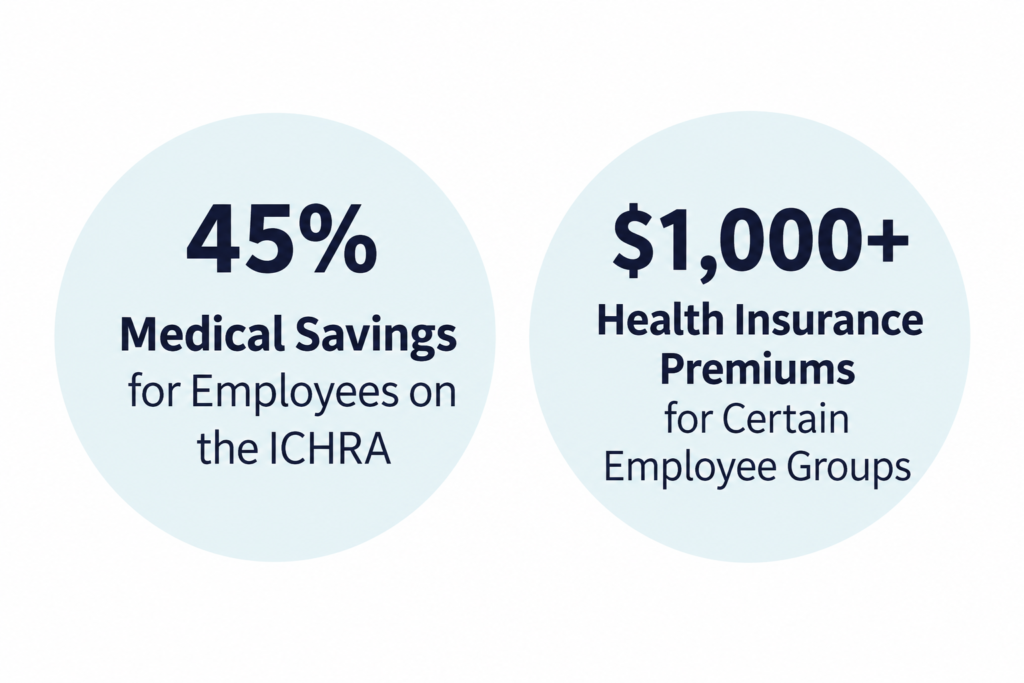
For a 45-location restaurant and hotel group operating across several states, rising restaurant health insurance costs were not distributed evenly across its workforce. Employees in certain states were paying more than $1,000 in health insurance premiums, while the majority of employees were paying approximately $650. GoBenefits analyzed the group’s health insurance claims and identified a relatively small employee population responsible for a significant share of total claims.
By implementing a risk-segregated benefits strategy with an ICHRA (Individual Coverage Health Reimbursement Arrangement) for the higher-risk population, we helped them to achieve approximately 45% medical savings for employees on the ICHRA while maintaining quality healthcare coverage for both employee groups.

Industry
Restaurant & Retail
Challenge
High-Cost Claims & Uneven Healthcare Risk
Strategy
Risk Segregation + ICHRA
Result
~45% Medical Savings for Employees
The Challenge: Rising Health Insurance Costs Were Being Driven by Uneven Healthcare Risk
Managing restaurant employee benefits across multiple locations can become increasingly complex when employee populations have very different healthcare needs and utilization patterns. For restaurant groups with hundreds or thousands of employees, a small number of high-cost claims can have an outsized impact on the broader group health insurance plan, particularly when enrollment is not large enough to effectively spread the risk.
The organization needed to address this imbalance without simply shifting high-cost employees away from quality coverage. The goal was to determine whether its existing health insurance strategy could be structured more effectively around the different risk profiles within its workforce while maintaining competitive benefits for employees.

Key Challenges
Uneven Risk Distribution: Employee populations had different healthcare needs and risk profiles.
Limited Risk Flexibility: A single group health plan limited flexibility to address differences in healthcare utilization.
Impact on the Broader Plan: High-cost claims could affect the broader group health insurance program.
Employee Benefit Value: Alternative strategies needed to maintain meaningful healthcare coverage.
Long-Term Cost Stability: A sustainable approach was needed to manage healthcare costs and renewal pressure.
The Solution: A Risk-Segregated Benefits Strategy Built Around Different Employee Risk Profiles
GoBenefits took a risk-based approach to the organization’s employee benefits and group health insurance strategy, evaluating how healthcare claims and utilization varied across employee populations. Rather than applying the same benefit structure across the entire workforce, the analysis focused on whether different populations could be served more effectively through separate benefit strategies.
The analysis identified a relatively small employee population with a disproportionate share of healthcare claims. This population was affected by a high-cost medical condition and network pricing disadvantages, while the remaining workforce had a different healthcare risk profile.

Separate Benefit Strategies for Different Employee Populations
Higher-Risk Employee Population: An ICHRA (Individual Coverage Health Reimbursement Arrangement) was implemented for the higher-risk population, providing an alternative benefits structure better suited to its healthcare risk profile.
Healthier Employee Population: The remaining, healthier employee population continued with a traditional group health insurance plan, allowing the existing group structure to serve employees with a different claims and utilization profile.
This approach helped prevent the healthcare experience of one employee population from determining the benefits strategy for the entire workforce. Instead, each population could receive coverage through a structure designed around its specific healthcare needs and risk profile.
Rather than treating the workforce as a single risk pool, we created a more targeted restaurant health insurance strategy that accounted for the differences in healthcare risk, utilization, and benefit needs across employee populations.
The Results
Smarter Risk Allocation. Lower Medical Costs.
By aligning benefit strategies with different employee risk profiles, we helped the organization create a more targeted approach to healthcare coverage. The higher-risk population received an ICHRA strategy designed around its needs, while the healthier employee population continued with a traditional group health plan.
- Better-aligned coverage for different employee populations
- Greater flexibility in employee benefits and health plan design
- Quality healthcare coverage maintained for both employee groups
- More targeted healthcare cost management based on claims experience
- Greater employee choice through access to individual market coverage
- A more sustainable benefits strategy for managing long-term healthcare costs
This approach demonstrated that risk segregation is not about reducing employee benefits. By matching the right health plan strategy to the right employee population, the organization was able to better manage medical costs while continuing to provide quality healthcare coverage.
“GoBenefits helped us take a more strategic approach to managing our healthcare costs. By analysing our claims and creating benefit strategies for different employee populations, we were able to provide coverage that better aligned with their needs while achieving significant medical savings for employees on the ICHRA.”
— Multi-State Restaurant & Hotel Group
Is Rising Health Insurance Costs Putting Pressure on Your Benefits Strategy?
GoBenefits helps multi-location employers analyse claims, identify opportunities for risk segregation, and design benefit strategies that better align healthcare costs with the needs of different employee populations.